When I first started working with small businesses, one problem stood out immediately: billing. Most of the software out there was either too bloated or too complicated for real-world use. I wanted something clean, fast, and made for people like the ones I grew up around. That’s how Bill-Generator began.
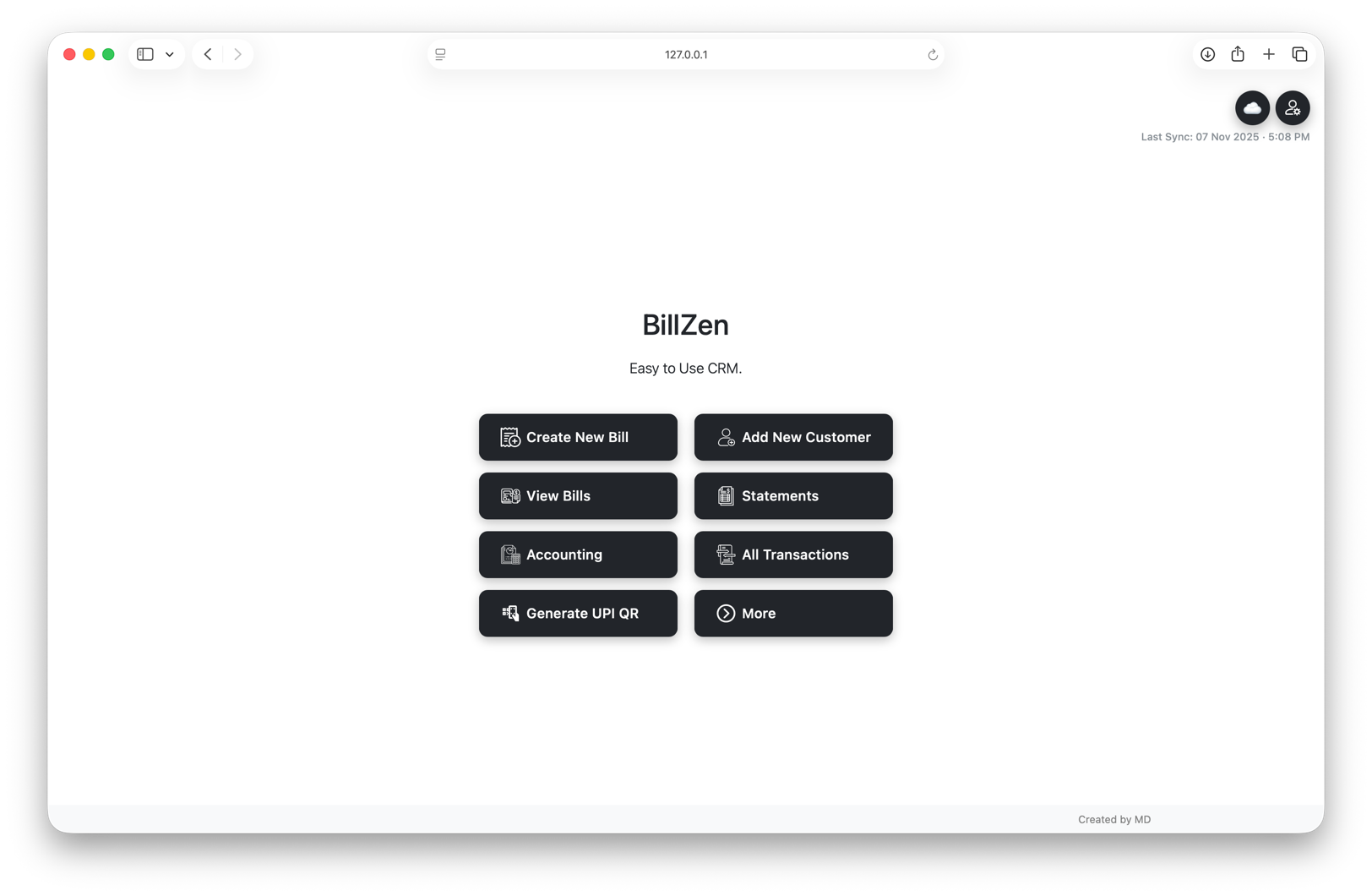
The goal was simple: make invoicing effortless. With Flask as the backbone, Bill-Generator lets users create professional invoices in seconds. Every detail — from client selection to tax breakdown — is automated and designed for speed. I wanted it to feel like part of the workflow, not another tool to wrestle with.
Design before features
As the project grew, I focused on design first. A bill shouldn’t just function — it should look beautiful when printed. Every template, font, and spacing element was tuned to give a clean, print-ready output that feels professional, not cluttered.
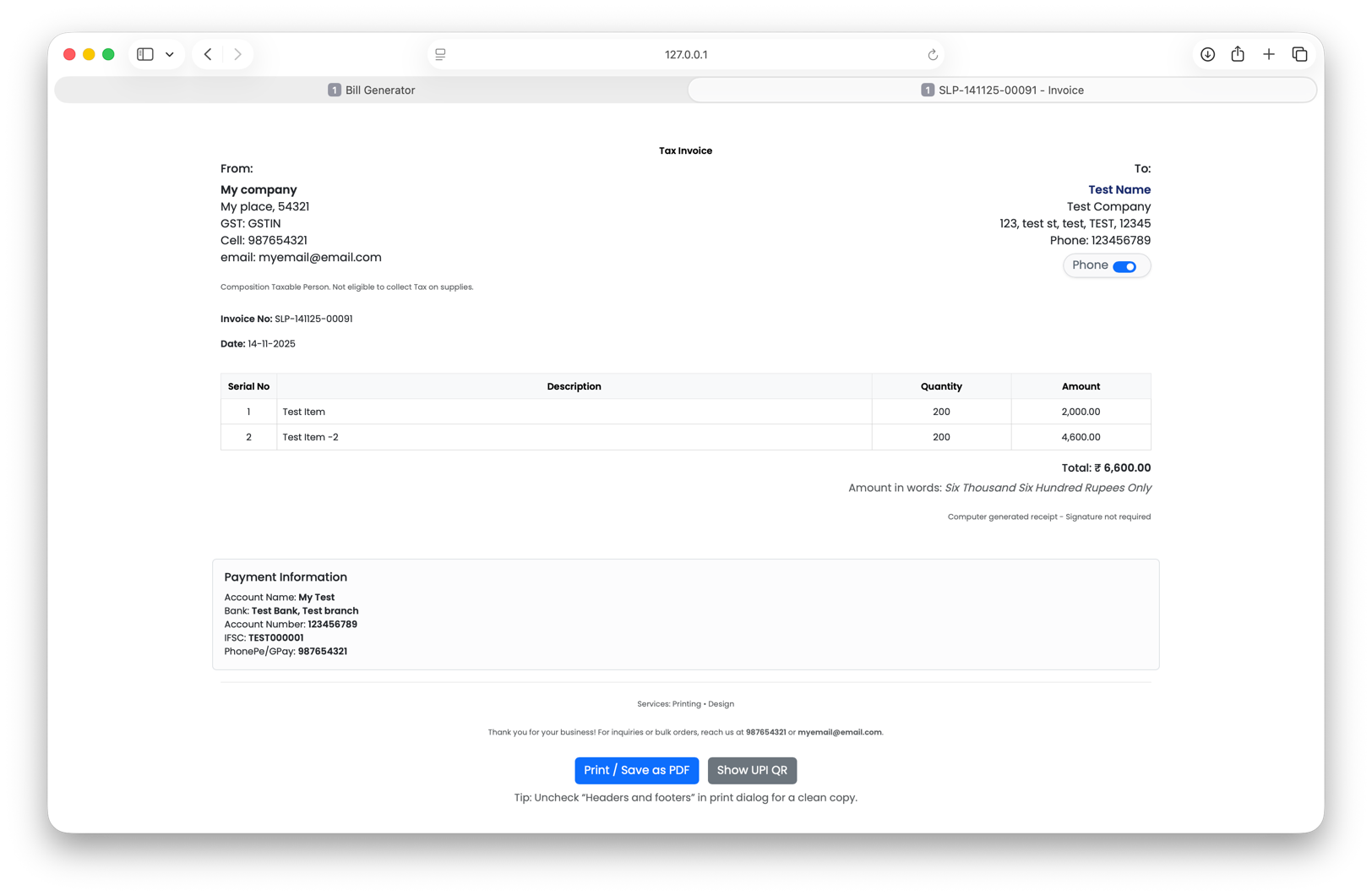
What surprised me most was how small details made the biggest difference. Persistent alerts, adjustable fonts, even a simple “Paid” toggle became user favourites. And because the entire system runs locally, businesses can work without relying on the cloud — something a lot of people appreciate more than ever.
Why local-first, still
The pricing page is one line: ₹0, forever. No tiers, no seats, no telemetry, no SaaS version waiting in the wings to swallow the local one. The SQLite file is the export. MIT-licensed, run on the machine sitting under your desk, fork at will.
Bill-Generator isn’t a business. It’s a piece of plumbing I give back to the small businesses and freelancers I grew up around. Invoicing shouldn’t cost ₹999/seat/month, so here’s some that doesn’t.
The full landing page covers the architecture, the configuration knobs, and the install paths. If you’re running a print shop, a tailor counter, a tutoring centre, or freelancing solo — read the rundown and try it.
This project taught me that good design and utility don’t compete; they work together. It also taught me something else, which became the seed for what I’m building now: most of the SaaS tooling small teams pay for is overpriced plumbing. Some of it — like invoicing — can just be given away. Other parts — like product analytics and lifecycle email — deserve a proper rebuild. That second one is GetFluxly.